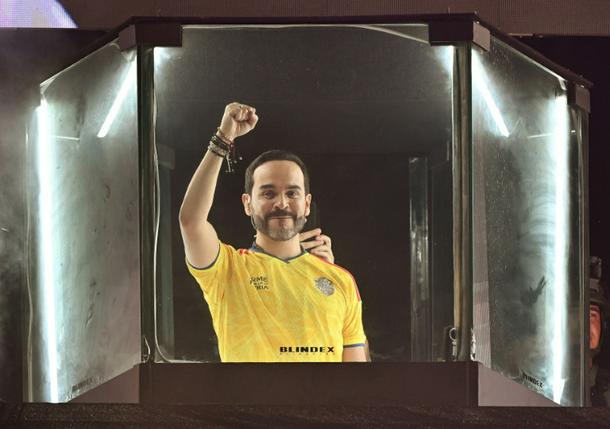
Colombia's presidential candidate for the Defensores de la Patria movement, Abelardo de la Espriella, speaks to supporters following the preliminary results of the presidential runoff election at the Ventana al Mundo monument in Barranquilla, Colombia, on June 21, 2026. A flamboyant US-backed lawyer who has never held public office narrowly won Colombia's presidential runoff on June 21, swinging the country hard to the right on a promise to wage war against drug-running guerrilla groups. With just a handful of polling centers left to report, Abelardo de la Espriella had 49.65 percent of the vote -- an unassailable lead over left-wing Senator Ivan Cepeda who trailed on 48.70 percent.
Barranquilla (Colombia) (AFP) - A flamboyant US-backed lawyer who has never held public office narrowly won Colombia’s polarizing presidential runoff Sunday, swinging the country hard right and sparking violent protests.
With almost all the votes counted, Abelardo de la Espriella held 49.66 percent of the vote versus left-wing Senator Ivan Cepeda’s 48.70 percent.
The 47-year-old’s slender win triggered demonstrations, but will ease ties with Washington and extend a regional right-wing wave centered on “iron fist” security policies.
“We are beginning a new era!” he told supporters in the Caribbean city of Barranquilla from behind thick bulletproof glass.
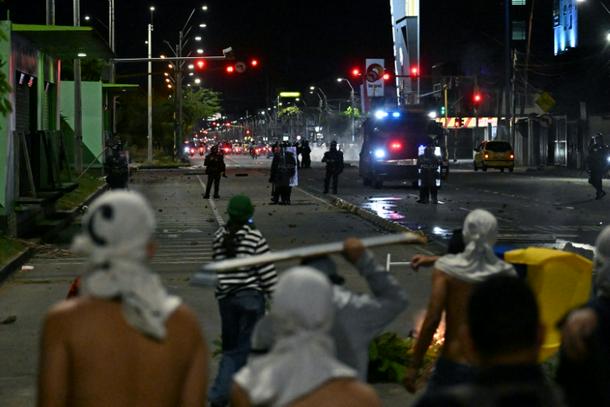
Demonstrators clashed with riot police to protest the preliminary results of the presidential runoff election in Cali, Colombia
“For those who have sown violence, terror, drug trafficking, and corruption all these years, their time is up!” he said, echoing his vow to wage war against drug-running guerrilla groups.
US President Donald Trump cheered the result, exclaiming “He Won, BIG!” as a host of right-wing leaders from across the Americas clamored to offer congratulations and support.
But after a campaign marred by guerrilla bomb attacks and the murder of a leading conservative presidential candidate, there was a quick sign of how tough it will be for De la Espriella to unite this deeply divided nation.
As night fell, thousands of protestors gathered in Colombia’s largest cities.
In Cali, some burned American flags as others wielded steel bars and clashed with riot police, who tried to disperse the crowd with teargas.
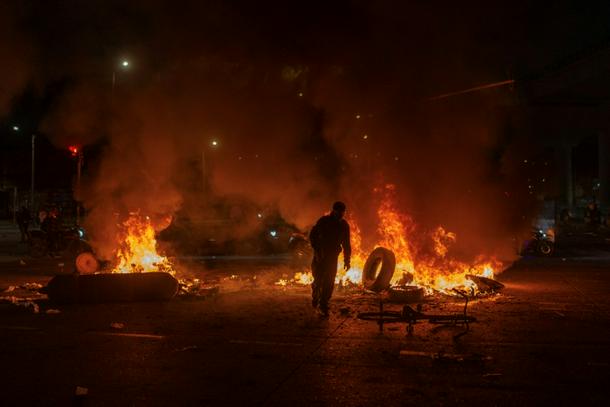
A man throws a tire into a fire during clashes with police as demonstrators protest against the preliminary results of the presidential runoff election in Bogotá, Colombia, on June 21, 2026. A flamboyant US-backed lawyer who has never held public office narrowly won Colombia's presidential runoff Sunday, swinging the country hard to the right on a promise to wage war against drug-running guerrilla groups. With more than 99 percent of polling centers reporting, Abelardo de la Espriella had 49.67 percent of the vote, an unassailable lead over his rival, left-wing Senator Ivan Cepeda who trailed at 48.69 percent, according to official results.
There was also unrest in the capital Bogota, where demonstrators burned tires and hurled bricks at police.
“We’ve already had many years of right-wing governments that care only about making the rich richer,” 26-year-old student Natalia told AFP.
But elsewhere there was elation. De la Espriella supporters poured onto the streets of several cities wearing the canary-yellow national football jersey he had adopted as a campaign uniform.
They waved flags, blew horns and expressed hope that “The Tiger,” as they call him, would bring security.
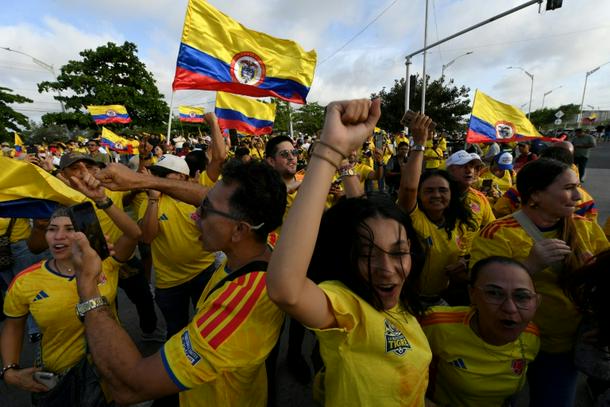
Supporters of Colombia's presidential candidate for the Defensores de la Patria movement, Abelardo de la Espriella, react after the first results of the presidential election runoff at the Ventana al Mundo monument in Barranquilla, Colombia, on June 21, 2026. Colombians voted on June 21 in a polarized presidential runoff that could reshape the country's fragile peace process and relations with the United States, after the most violent election campaign in a decade.
“I’m very happy,” said 30-year-old supporter Daniela Oliveros in Barranquilla. “I believe a lot in the country, I believe a lot in freedom.”
“Abelardo, at this moment, is giving us above all a sense of security, employment, and dignity,” she said.
- War and peace -
With only a few hundred thousand votes separating the two candidates – De la Espriella used his victory speech to try to calm his critics.
“Mine will be an absolutely democratic government and a guarantor of freedom and institutional order,” he said vowing to respect all races, religions and political stripes.
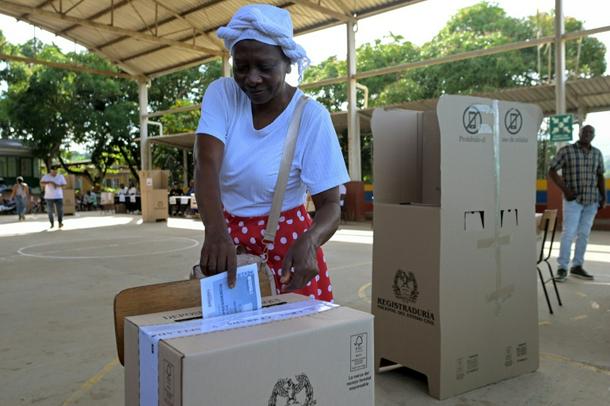
A woman votes at a polling station during the presidential election runoff in Santander de Quilichao, Colombia
“I will govern for all Colombians, for those who voted for me and for those who choose another candidate” he said.
His win marks a return to power for Colombia’s right wing, which has ruled for all but four of the last 200 years.
It is likely to test Colombia’s fragile decade-old peace process.
During the campaign, the dual US-Colombian national, told AFP that he would scrap peace talks with dissident groups and launch a 90-day campaign of US-backed airstrikes against them.
In the 10 years since a landmark peace accord was signed with FARC guerrillas, much of Colombia has prospered.
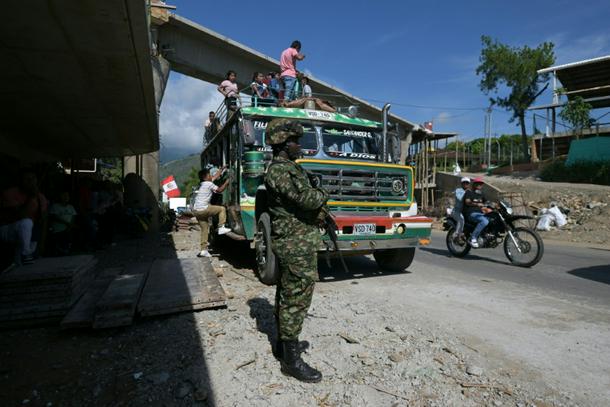
A soldier stands guard along the Pan-American highway near a polling station in Santander de Quilichao, Cauca department, Colombia, during the presidential runoff election on June 21, 2026. Colombians were voting on June 21 in a polarized presidential runoff that could reshape the country's fragile peace process and relations with the United States, after the most violent election campaign in a decade.
But cartels and dissident groups still control pockets of the country, cocaine exports are at an all-time high and Colombia remains one of the world’s most economically unequal countries.
“Colombia’s best days are ahead,” said US Secretary of State Marco Rubio, adding that Washington “looks forward to working closely with your incoming administration.”
- ‘Thirst for power’ -
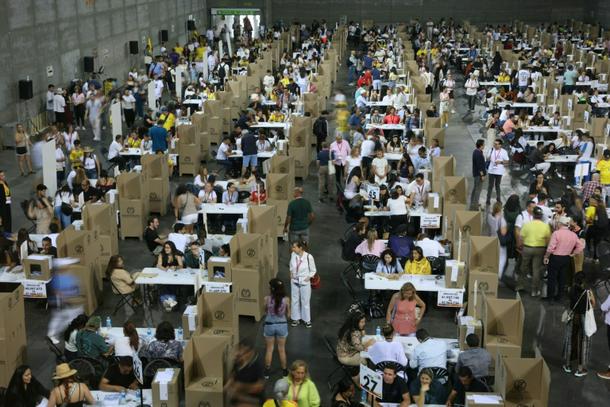
Colombians living in Spain vote in the second round of the Colombia's presidential election
His opponent, 63-year-old leftist Senator Ivan Cepeda stopped short of conceding defeat.
“Once the count has been completed and its final result is known, and the corresponding checks have been carried out, we will acknowledge the official result,” he told supporters.
For Cepeda to win, hundreds of thousands of votes would need to be overturned in a final count. The margin of error for the first count is usually in the low thousands.
De la Espriella warned Cepeda to respect the vote, form the opposition and “don’t even think about stoking violence.”
“The Tiger can still bite you harder than he has bitten you at the ballot box” he warned.