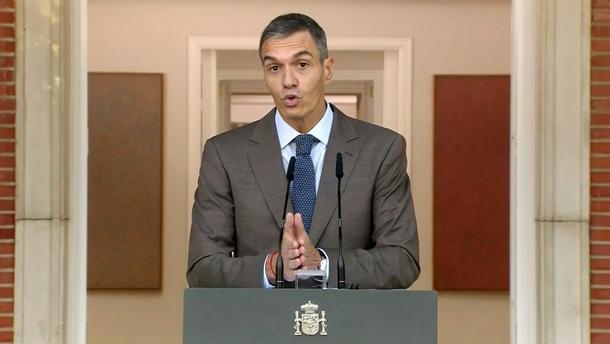
Spanish Prime Minister Pedro Sanchez is seeking a new mandate amid nationwide protests over housing
Madrid (AFP) - Spain’s Socialist Prime Minister Pedro Sanchez on Monday called a snap election for November 29, after parliament rejected housing relief measures proposed by his minority government amid nationwide protests.
The defeat on Friday was just the latest political setback for Sanchez, one of the few left-leaning government leaders still in power in Europe.
“To do more, we need to renew and broaden the support of the people,” Sanchez said in a televised address, adding that his aim was “to secure a much broader, progressive majority in parliament”.
The next general election was scheduled to take place by August 2027.
His announcement came after tens of thousands of people marched in Madrid and other cities on Saturday demanding action on housing affordability.
The government’s proposed measures, which included automatic renewal of tenancy contracts and restrictions on evicting vulnerable tenants, were voted down by opposition parties in Spain’s parliament.
The defeat infuriated the protesters and underscored the difficulties Sanchez’s minority coalition government faces in passing legislation.
The protests were fuelled by the eviction last month of 87-year-old Maricarmen Abascal from the Madrid flat where she had lived for decades.
Hundreds of demonstrators have occupied a tent camp in central Madrid for more than a week, demanding housing reforms.
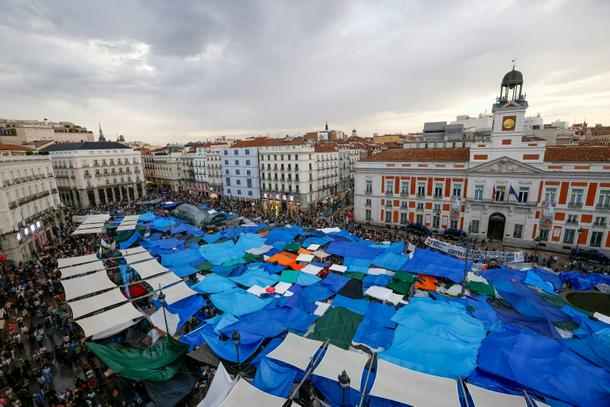
Protesters demanding urgent action on housing affordability have set up a tent camp in the heart of Madrid
One of them, 19-year-old student Sara Prieto Aparicio, told AFP that she believed that calling the snap election “was the best thing to do”.
“There is a big mobilisation by citizens and I think this favours elections,” she said.
- ‘Unstoppable’ protests -
“This wave of indignation is unstoppable and we are not going to stop,” Alicia del Rio, a spokesperson for the Madrid Tenants’ Union, one of the protest leaders, said while renewing a call for a general strike.
Recent opinion polls have generally put the main opposition conservative Popular Party (PP) ahead of the Socialists.
The PP would likely need to partner with the far-right Vox to form a government however.
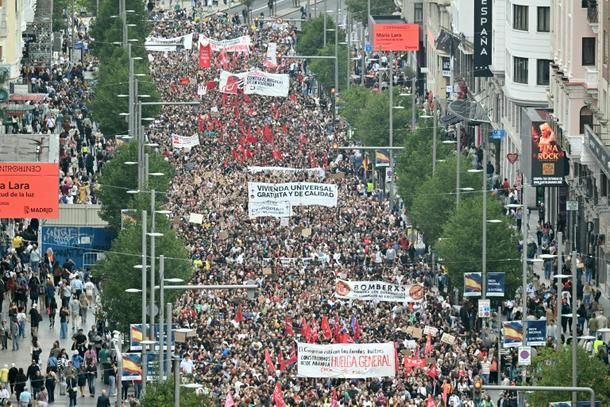
Demonstrations have taken place nationwide
Making housing the central campaign issue “could mobilise left-leaning voters”, said Federico Santi, a Europe analyst at political risk consultancy Eurasia Group.
He said an early election could help limit further erosion of support for the Socialists, amid resurgent inflation, legislative deadlock and corruption scandals.
Housing has become one of Spain’s main political issues as supply lags demand. Average rents have nearly doubled over the past decade while asking prices have risen about 90 percent, according to property website Idealista.
Abascal’s eviction catalysed long-running anger about runaway housing costs.
The backlash led the new corporate owners of the building that includes her flat to reach a deal allowing her to return at a low rent.
The housing bills were rejected in parliament on Friday after the Catalan separatist party Junts, whose support is crucial to the government, voted against them, arguing they would worsen the housing crisis.
- Sanchez defends record -
Sanchez, in office since 2018, defended his record, saying Spain’s economy had grown faster than many European countries and unemployment had fallen. He remains under pressure over corruption scandals involving people close to him, including his wife and senior Socialist Party figures.
Many ordinary Spaniards say they have not felt the benefits of the country’s economic growth, with inflation outpacing wage growth and rent taking up an increasing share of household incomes.
PP leader Alberto Nunez Feijoo welcomed the election announcement. “If eight years have not been enough, why would four more be?” he said.