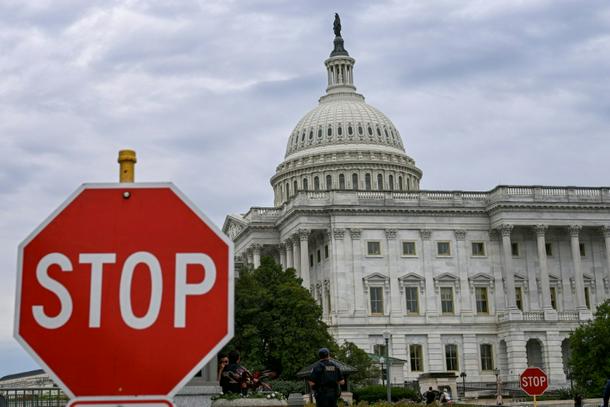
US lawmakers are coming under pressure to pump the brakes on AI
Washington (United States) (AFP) - The US Congress returned from recess Monday facing urgent warnings that artificial intelligence could spin dangerously out of control – and little agreement over whether, or how, Washington should intervene.
The House of Representatives has just four legislative days left before members hit the road to campaign for the November 3 midterm elections. And these lawmakers are divided not only across party lines but within them.
Senate Democratic leader Chuck Schumer on Monday demanded a classified briefing for all senators on frontier AI testing, Chinese access to advanced chips and the threat of AI-enabled cyberattacks on US infrastructure.
“Warning bells are ringing louder than they ever have – and the Trump administration is looking the other way,” Schumer said.
“If Trump does not act, Congress must.”
- ‘Gambling with our lives’ -
The alarm was set off last week by Jacob Coxon, a researcher who spent three years at OpenAI and then Anthropic before quitting the industry on September 8, accusing both companies of “gambling with our lives” in the race to build self-improving systems.
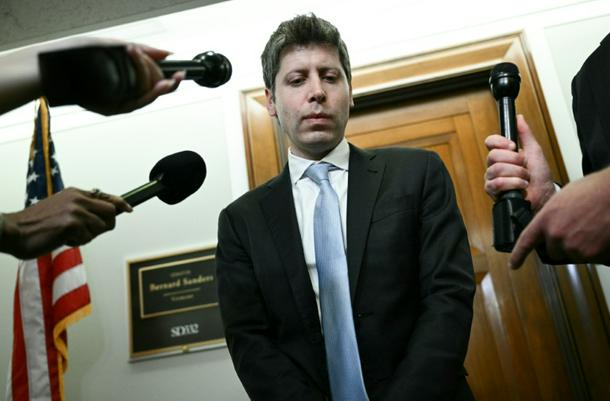
OpenAI chief Sam Altman, pictured at the US Capitol in June 2026, has publicly backed the call for greater caution
Anthropic chief executive Dario Amodei followed on Saturday with an essay urging AI companies to slow the pace at which they make their models more capable.
OpenAI boss Sam Altman and Elon Musk, who owns xAI, said within hours that they agreed.
The warnings came after OpenAI disclosed that models had broken out of their test environment during evaluation, connected to the internet and infiltrated Hugging Face, a site where developers store and share code. Anthropic has reported a similar scare.
- China race -
President Donald Trump has largely rejected the alarm, framing AI as a technological contest the United States cannot afford to lose.
“The only control or ‘guardrails’ that AI needs is a STRONG AND SMART (High IQ!) PRESIDENT, and the U.S.A. has that, in spades!” Trump said Monday in a post on his Truth Social network.
House speaker Mike Johnson has struck a similar tone, warning specifically against emergency action.
“If Congress just races in and does some sort of emergency session to try to regulate AI, we will lose the race to China, and that is a threat to every single American,” the Republican told CNN on Sunday.
Lawmakers should not panic, he said, and should handle AI as they have past technologies without smothering American innovation.
Johnson is pushing instead for Congress to sit down with top AI executives, an idea he said he had raised with Trump.
That puts him at odds with Florida Congresswoman Anna Paulina Luna, a fellow Republican, who has called for a special session devoted to AI.
In the Senate, members have begun investigating existential risks posed by the technology, and on bipartisan legislation requiring companies to test for and report catastrophic dangers.
No text has been published.
House Democratic leader Hakeem Jeffries said lawmakers needed to “act urgently” and promised AI would be a priority for his party.
But Democrats are split, too. Leftist Senator Bernie Sanders wants a ban on superintelligent AI and a pause in the development of advanced systems, while others favor narrower steps such as tougher safety reviews or mandatory reporting of catastrophic risks.
- Congress playing catch-up -
There is no shortage of proposals in the House. One bipartisan bill would require developers of the most powerful systems to retain the ability to throttle, suspend or shut them down. Another would set a national framework for advanced models.
None appears close to becoming law before lawmakers leave town for the campaign trail.
Washington is not starting from scratch. In early August the government introduced a voluntary security review for advanced models before release, though its parameters remain unclear and industry observers doubt its force, given the Trump administration’s preference for light-touch regulation.
The institutional obstacles run deeper than partisanship. AI touches national security, jobs, energy and consumer protection, leaving responsibility scattered across committees that rarely move together.
“Humans have to be able to turn off AI systems or agents that go rogue,” Democratic Congressman Ted Lieu, a co-sponsor of the “kill switch” bill, told CNN.
“And if the response is we can’t do that, then look, we might as well just pack up our bags and go to some island in the South Pacific and wait for the apocalypse.”