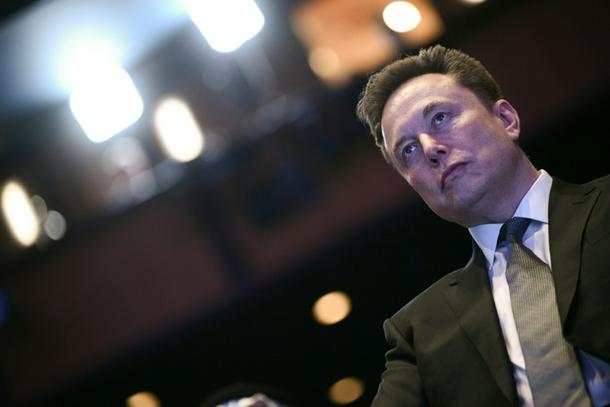
Billionaire Elon Musk would keep control of SpaceX under the filed IPO documents currently under consideration by federal regulators
New York (AFP) - SpaceX’s filing with US regulators was revealed Wednesday, laying out plans for what could become the largest initial public offering in history as Elon Musk’s rocket and satellite company seeks to raise up to $75 billion on the public markets.
The filing with the Securities and Exchange Commission – the first time SpaceX has publicly disclosed detailed financial information – revealed that the company generated $18.7 billion in revenue in 2025 and posted an operating loss of $2.6 billion as it poured money into next-generation rocket development and AI.
The S-1 prospectus, a document companies are required to file with the SEC before listing on a public stock exchange, provides potential investors with detailed financial information, risk factors and business strategy.
The filing showed that SpaceX’s Starlink satellite internet business is the clear financial engine of the company, generating $11.4 billion in revenue in 2025, up nearly 50 percent year-on-year, with operating income of $4.4 billion.
The AI segment, which includes xAI and the X platform, recorded $3.2 billion in revenue for the full year 2025 but posted an operating loss of $6.4 billion as the company raced to build out AI training data centers.
Capital expenditure for the AI segment alone reached $12.7 billion in 2025, and $7.7 billion in just the first quarter of 2026.
The filing confirmed a dual-class share structure that will leave Musk firmly in control of the company after the listing.
Musk, the world’s richest man, is set to control approximately 79 percent of voting power while holding around 42 percent of equity.
SpaceX acknowledged the arrangement poses risks for outside investors, noting that Musk “will have the power to control the outcome of matters requiring shareholder approval, including election of all our directors.”
As expected, the filing laid out an ambitious roadmap to build data centers in space, arguing that solar energy captured in orbit represents “the only truly scalable solution” to the power demands of AI computing.
SpaceX said it plans to begin deploying AI compute satellites as early as 2028, with the long-term goal of putting 100 gigawatts of compute capacity in orbit annually – a task it said would require thousands of rocket launches per year and transporting roughly one million metric tons to orbit annually.
SpaceX claimed a total addressable market of $28.5 trillion across its businesses, a figure that excludes China and Russia.
The total addressable market, or TAM, is a company’s estimate of the maximum revenue opportunity available for its products and services.
Reports indicate SpaceX is targeting a June listing with trading commencing shortly after.
The company is seeking to be listed on the Nasdaq stock exchange under the symbol SPCX.