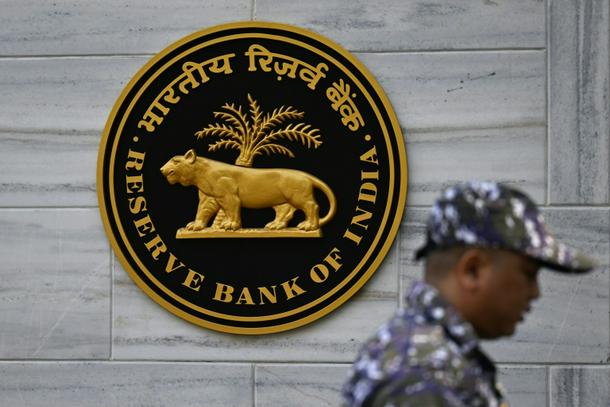
The RBI's rate hike was its first since February 2023
Mumbai (India) (AFP) - India’s central bank hiked interest rates Wedneday for the first time since 2023 as the Middle East conflict stokes inflation in Asia’s third-largest economy and batters a weakened rupee.
The Reserve Bank of India (RBI) said the benchmark repurchase rate, the level at which it lends to commercial banks, would be raised by 25 basis points to 5.50 percent after a unanimous vote by a six-member panel.
In doing so, the RBI shifted gears to join several central banks around the world who have raised rates to curb price rises or boost their currencies.
Since the outbreak of the Iran war in February, the RBI has stood pat as it waited to assess the impact of volatile oil prices on the world’s fastest-growing major economy.
But resilient GDP growth last quarter has allowed it to focus on higher costs in a country that imports most of its energy and has been hit by a weak monsoon that could result in a spike in food prices.
Retail inflation rose to 4.8 percent in August – the third straight month that headline inflation breached the RBI’s medium term target of four percent – with data signalling that inflationary pressures had spread beyond food and transport.
“It is clear that inflation and its outlook are not benign as they were last year,” RBI governor Sanjay Malhotra said in a televised address from financial capital Mumbai, noting that there was “some evidence of… generalisation of inflation”.
- ‘Calibrated tightening’ -
“The MPC (monetary policy committee) also decided to change the stance to calibrated tightening,” he said.
“It underscored that given the current conditions, rate cuts are off the table in the near term, and policy action ahead can only be a rate hike or a pause, depending on the evolving conditions and the outlook.”
The hike was the first since February 2023 and analysts said the central bank will likely lift them again.
“The rising interest rate backdrop globally has… reduced RBI’s degrees of freedom. We see likelihood of another 50 bps hike this cycle,” said Garima Kapoor of Elara Capital.
Adding to the central bank’s calculations is pressure on the Indian rupee, which has been at near record lows over the past week.
To stem the fall, the RBI has rolled out an array of moves to woo dollar inflows, including a deposit scheme for the Indian diaspora that raked in around $127 billion.
While the steps helped stem the rupee’s losses, the currency has faced fresh challenges as foreign investors continue to dump Indian equities and crude hovers around $100 a barrel.
India, the world’s third-largest buyer of oil, normally sources about half of its crude through the Strait of Hormuz, which has been effectively closed since the beginning of the Middle East war.
Analysts say this makes India among the most vulnerable economies to a global energy shock, as higher crude and fertiliser prices drive up the import bill.